Behind the apparitions and entities is a thoughtful warning about grief, vulnerability, superstition, and the stories people tell to survive fear.
The haunting may be ours
The most memorable idea in The Haunted Doorway is that fear does not always arrive from outside.
Sometimes it rises from memory, grief, trauma, exhaustion, guilt, isolation, or a mind attempting to protect itself from anunbearable truth. Jay Alani and Neil D’Silva build their collection around paranormal investigation, but the stories repeatedlyreturn to the emotional lives of the people involved. A haunted room may also be a room associated with loss. A terrifying figuremay emerge during disturbed sleep. A dangerous object may become the focus of fear because it gives shape to anxiety thatotherwise feels uncontrollable. The collection does not reduce every event to psychology, but it insists that the human mindbelongs at the centre of any honest inquiry.
Why compassion matters in an investigation
A person reporting a paranormal experience is often frightened, ashamed, or afraid of being mocked. The worst responseis immediate ridicule. The second-worst response is immediate confirmation that an entity is present. Both reactions removecomplexity. A compassionate investigator listens carefully, records details, checks practical risks, considers health andpsychological factors, examines the environment, and avoids escalating fear. This approach is visible in the collection’sunderlying philosophy. The witness is neither dismissed nor exploited. The goal is not to produce a dramatic video; it is to understand the situation and reduce harm.
Grief can change the texture of reality
Bereavement is one of the most powerful forces in supernatural storytelling because grief alters attention. A sound,smell, dream, object, or familiar routine can feel like contact with the person who has died. Such experiences can becomforting, frightening, or both. Fiction allows the book to explore this emotional ambiguity without issuing a clinical verdict.The reader can recognise the reality of the feeling even when the cause remains uncertain. This is where horror becomesemotionally intelligent: the question is not only whether a ghost exists, but what the possibility of the ghost means to theliving.
Trauma often speaks through images
Trauma is rarely organised into a neat verbal account. It can return through fragments, bodily reactions, repeateddreams, avoidance, hypervigilance, and a sense that danger is present even in safety. In paranormal narratives, thoseexperiences may be described as possession, attack, a shadow presence, or a hostile force. The Haunted Doorway uses thetension between psychological and supernatural language to create suspense, but it also encourages readers to takedistress seriously. An explanation based on trauma is not an accusation that a witness is inventing events. It is recognitionthat the body and mind can carry pain in powerful forms.
Superstition can hide real danger
A supernatural explanation can sometimes distract from a more immediate threat. Abuse, coercion, fraud, unsafebuildings, toxic exposure, sleep deprivation, substance use, or deliberate manipulation may be ignored when everyone focuseson an alleged spirit. This is why evidence-based inquiry matters. The collection’s stories teach readers to ask who isvulnerable, who controls the narrative, and whether the paranormal claim benefits someone. Horror becomes sociallyrelevant when it reveals how fear can be used as power.
Entertainment without accountability
The popularity of haunted-location content has created a culture in which people may trespass, perform rituals they do notunderstand, provoke distressed individuals, or enter dangerous structures for attention. The book’s investigative perspectivepushes against this behaviour. The paranormal may be entertaining, but real locations and real people require consent andresponsibility. Jay Alani’s work as a filmmaker, podcaster, helpline pioneer, and founder of The Paranormal Company gives thiswarning additional relevance. Building a Paranormal Universe through stories and technology does not require abandoningethics; it requires making ethics part of the storytelling.
Fear can also create curiosity
The collection is not relentlessly bleak. Readers have described being frightened, amused, fascinated, and motivated toresearch unfamiliar references. That mixture is one reason the book works well as an introduction to horror. Curiosity givesthe reader a form of agency. Instead of closing the book after an unsettling image, the reader searches for the history of abelief, the science behind a phenomenon, or the psychology of a reported experience. Fear becomes an invitation to learnrather than an instruction to surrender reason.
The prose keeps the emotional questions visible
Neil D’Silva’s storytelling helps ensure that the investigative concepts remain connected to character.
A purely technical account might catalogue environmental readings and witness statements without producing emotionalinvolvement. Fiction requires the reader to care about what happens to a person. The stories therefore balance explanation withmomentum, making the research part of the tension. Each fact has narrative value because it either supports a theory,challenges an assumption, or changes the danger faced by a character.
For believers, sceptics, and everyone between
The Haunted Doorway does not demand a single worldview. A committed believer can appreciate the respect given tounexplained experiences. A sceptic can appreciate the attention to psychology, evidence, and alternative causes. A reader whoremains uncertain can occupy the book’s most productive position: open but cautious. This inclusiveness is one of thecollection’s strengths. Horror often becomes less interesting when it lectures the audience about what to believe. These storiesare more effective when they allow the evidence, emotions, and gaps to coexist.
Why the book lingers
A jump scare ends when the body calms down. A reflective horror story can continue because it changes the way thereader looks at ordinary experience. After reading The Haunted Doorway, a creaking door, recurring dream, unfamiliar growth,abandoned building, or story inherited from a relative may carry new possibilities. The book does not prove that the supernaturalis everywhere. It demonstrates that interpretation is powerful, and that the distance between an event and its meaning canbecome a haunted space of its own.
The comfort hidden inside horror
Horror may seem like a genre built only to disturb, but it can also provide a controlled space in which readers confrontfear. A story has boundaries. The book can be closed, the light can be switched on, and the frightening image can bediscussed. Within those boundaries, readers can explore death, vulnerability, loss of control, loneliness, and uncertaintywithout facing the real-world event directly. The Haunted Doorway occasionally offers humour, explanation, spiritualreassurance, or simple human connection alongside dread. Those shifts prevent the collection from becoming emotionallymonotonous. They also suggest that investigation itself can be comforting. To ask questions, test possibilities, and listencarefully is to replace helplessness with method. Even when a case remains unresolved, the frightened person is no longeralone. That quiet movement from isolation toward attention may be the most humane promise in the book. It also explainswhy readers can describe the collection as both frightening and enjoyable. The pleasure does not come from another person’ssuffering; it comes from entering uncertainty with a guide, observing how a case changes, and emerging with a largervocabulary for fear. The book offers the thrill of approaching the dark while repeatedly reminding us to carry evidence,empathy, and common sense.
Final verdict
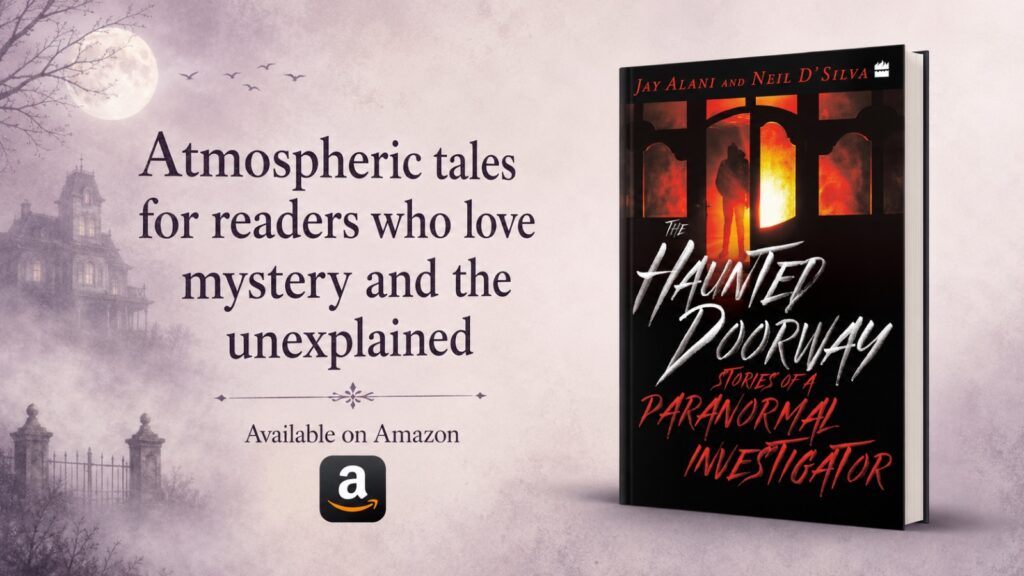
The Haunted Doorway is an engaging collection, but its lasting value comes from the seriousness beneath itsentertainment. It recognises the thrill of the paranormal while warning against superstition, exploitation, and recklessimitation. It respects the emotional reality of witnesses while preserving the importance of evidence. It allows some mysteriesto be explained and others to remain open. Readers who want gore or constant shock may find the book more thoughtful thanextreme. Readers seeking atmospheric horror, psychological depth, cultural variety, and a humane investigative perspectivewill find a collection that is both accessible and quietly unsettling. The door it opens is not only supernatural; it leads inward.
Buy Now: https://www.amazon.in/Haunted-Doorway-Stories-Paranormal-Investigator/dp/936989652X/