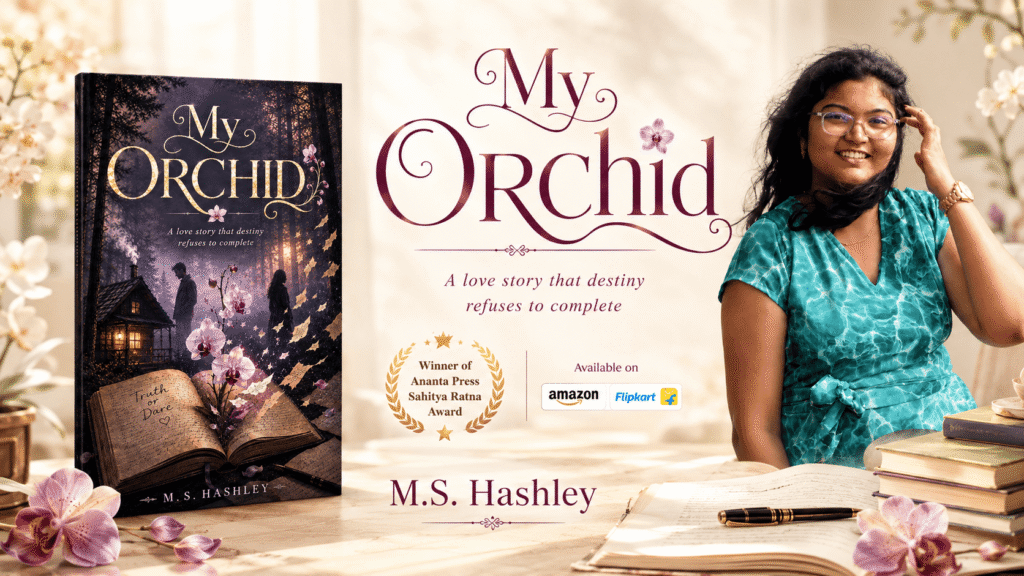
My Orchid is a romance, but I would describe it even more specifically as a story about what people do with love after they are hurt. Nearly every important character is carrying something unfinished. Hardhik carries the collapse of his relationship with Sana. Orchid carries the wound of a broken friendship and the loneliness of not feeling fully seen by her parents. Ro carries decades of love, guilt, and silence connected to Lavanya. Lavanya carries the memory of a man she once considered home. The plot brings these unresolved emotions together and asks a difficult question: does the past have to control the future simply because it still hurts?
That question appears early through Hardhik’s breakup. He is initially focused on fairness—who adjusted more, who should apologize first, who made the first move. Ro challenges him to think about love outside the language of scorekeeping. His point is simple but important: if you truly want a person in your life, the question of who “goes soft” first may matter less than whether you are willing to protect the relationship. Hardhik does not immediately understand this. He has to experience loss, regret, and eventually a completely different kind of connection before the idea becomes real to him.
Ro’s own story makes this lesson more powerful. He once loved Lavanya deeply. Their bond grew from intellectual respect and partnership, and he changed parts of his life because being with her made him want to become better. Yet he loses her, and for years that memory becomes both his treasure and his prison. He stays emotionally frozen, allowing a past love to define what he will not permit himself to have in the present. The book does not mock him for this. It understands why grief can become identity. But it also gradually suggests that loyalty to someone’s memory does not require refusing all future happiness.
Orchid mirrors this pattern in a younger form. Her trauma comes from friendship rather than romance. She has experienced how devastating it can be to lose a person who felt like a soulmate, and she is terrified that romantic love could create an even deeper wound. When she meets Hardhik after their anonymous diary exchanges, she is honest about that fear. She does not say that she feels nothing. In fact, the problem is almost the opposite: she feels enough that the possibility of losing him becomes frightening before the relationship has properly begun.
This is where My Orchid becomes more interesting than a simple “boy convinces girl to date him” story. The conflict is not really about whether Orchid likes Hardhik. It is about whether avoiding future pain is worth sacrificing present possibility. Hardhik argues that she cannot let yesterday’s graves decide tomorrow. That language may be romantic and dramatic, but the underlying idea is relatable. Many people enter new relationships carrying the emotional logic of old ones. The person in front of them has to deal with pain caused by someone else.
The book’s answer is not naïvely optimistic. Hardhik believes love should be chosen despite fear, and for a time the story rewards that choice. He and Orchid build a warm relationship, make marriage plans, share ordinary domestic jokes, support each other’s writing, and begin imagining a future. Yet the subtitle tells us that destiny will not cooperate. The final tragedy could have turned the book into a message that Orchid was right to fear love. Instead, the story takes a more difficult position: loss can still happen, but that does not mean the love was a mistake.
This is one of the reasons the ending affected me. Orchid’s death is not only the loss of Hardhik’s future wife. It brings the book’s themes of sacrifice and memory to their most extreme point. She saves Ro because she understands how essential he is to Hardhik’s emotional wholeness. In her final moments, she also tells Ro that he has turned Lavanya’s memory into punishment rather than treasure. That observation ties the entire book together. Ro has spent years believing that continuing to suffer is somehow a form of faithfulness. Orchid challenges that belief even while she herself is becoming a memory.
The revelation of Orchid’s real name, Hrishika, just before her death adds another emotional layer. Throughout the romance, she has chosen privacy and controlled how much of herself to reveal. She allows Hardhik to call her Orchid and even carries that identity into their marriage plans. Giving him her real name at the end becomes a final act of complete trust. The anonymity that once protected her is finally surrendered when there is nothing left to protect. It is a painful but fitting conclusion to a relationship that began through partial revelation.
I also found the aftermath more meaningful than the accident itself. Dramatic tragedy can easily become manipulative if a story ends immediately after the shock. My Orchid continues. Hardhik attends the funeral, speaks with Maria, remembers Orchid’s writing, and chooses where to immerse her ashes based on a place she wanted to visit. Those details matter because grief is shown as attention continuing after death. He cannot give Orchid the future they planned, but he can still honor what she told him.
The conversation about “another universe” is particularly effective. It would be easy for Hardhik to escape into the fantasy that somewhere else everything worked out. Instead, he recognizes that imagining alternate realities can make us overlook the value of what actually happened in this one. He did have Orchid. He did make those memories. Grief does not cancel the reality of love. That is a mature idea inside an otherwise youthful romance.
The epilogue extends this philosophy to the other characters. Ro adopts a child, allowing himself to form a new attachment. He finally reconnects with Lavanya. Hardhik publishes his book and dedicates the first copy to Orchid. These are not replacements for what was lost. The story does not suggest that one person simply fills another person’s place. Instead, it shows life widening around grief. New bonds can exist alongside old memories.
The theme of sacrifice is more complicated. Ro sacrificed his reputation in connection with Lavanya. Orchid sacrifices herself to save Ro. Hardhik repeatedly thinks about giving up ego for relationships. The novel clearly admires selflessness, but it also shows that sacrifice without communication can create years of misunderstanding. Ro’s silence protects Lavanya in one sense but damages multiple lives in another. This makes the book more interesting than a simple celebration of noble suffering. Love may inspire sacrifice, but silence can turn sacrifice into confusion.
As a reader, I think My Orchid will appeal most to people who enjoy emotionally intense stories where romance is tied to grief, destiny, family history, and personal transformation. It is openly sentimental. It wants the reader to feel the highs and lows rather than observe them from a distance. Some scenes are playful and light, while others lean fully into melodrama. That contrast is intentional: the happy scenes create the memories that later become precious.
What makes the novella stand out is its insistence that an incomplete love story is not necessarily a meaningless one. Hardhik and Orchid do not receive the future they imagined, yet the relationship changes Hardhik’s life permanently. He becomes more thoughtful, more attentive, more serious about writing, and more capable of understanding Ro. Orchid’s love continues through those changes. The final question is therefore not “Did destiny let them stay together?” It is “What did their love make possible while it existed, and what does Hardhik choose to do with that love afterward?” My Orchid answers by choosing memory without surrender, grief without total collapse, and love without the guarantee of permanence.
Amazon Purchase Link