Every human being enters the world with an identity, dreams, abilities, and the desire to live with dignity. Yet, for countless individuals, opportunities and experiences are influenced by judgments they never chose—judgments based on appearance, skin colour, ancestry, or social background.
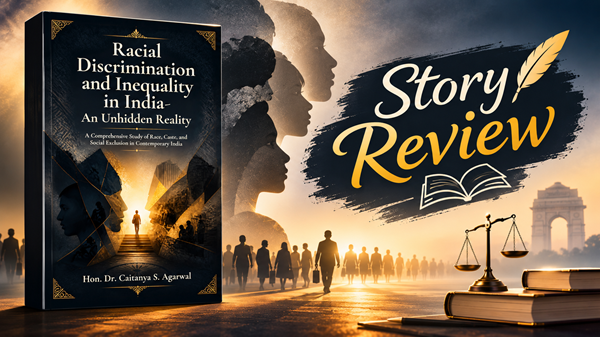
Racial Discrimination and Inequality in India – An Unhidden Reality by Hon. Dr. Chaitanya S. Agarwal explores this difficult reality, bringing attention to the prejudice, discrimination, and social inequalities that continue to affect individuals and communities. Although the book is a social study rather than a fictional narrative, its subject reveals a powerful human story: the struggle for equality, recognition, and the right to be treated with respect. Imagine a young student entering a classroom with enthusiasm and confidence, hoping to learn, develop friendships, and build a meaningful future.
Now consider how that experience might change if the student repeatedly encounters unfair judgments because of appearance or social identity.
The classroom, which should represent opportunity, may instead become a place of insecurity.
This illustrative situation reflects one of the concerns addressed by the book: discrimination can affect educational experiences and influence a person’s confidence and opportunities.
The impact of prejudice is not always immediately visible.
Sometimes, its consequences emerge gradually through exclusion, unequal expectations, and the repeated experience of being treated different The struggle for equality often continues beyond education. Professional life should provide opportunities for individuals to demonstrate their abilities, commitment, and knowledge. However, unfair assumptions and discriminatory attitudes can create barriers that prevent people from receiving equal consideration. The book highlights the influence of racial and social bias on employment, opportunities, and social status.Such discrimination can affect not only career development but also emotional well-being and personal dignity.The central concern is deeply human: no individual’s future should be restricted by characteristics unrelated to their abilities.
Discrimination is frequently discussed through laws, social structures, and institutional policies. Yet behind these discussions are individuals whose everyday experiences may be shaped by humiliation, exclusion, or unfair treatment. A person who is repeatedly judged because of skin colour or social identity may begin to question their sense of belonging. The book’s focus on human dignity encourages readers to recognize this emotional dimension. Equality is not simply about providing access to institutions. It is also about creating environments where individuals feel respected and valued. Despite the seriousness of its subject, the book’s central message points toward the possibility of social transformation. Education, awareness, diversity, inclusion, and effective legal protection can help challenge prejudice and promote fairness.
Changing discriminatory attitudes requires more than formal policies. It also demands reflection, empathy, and the courage to question assumptions inherited from society. Families, educational institutions, workplaces, and communities all have roles to play in creating a more inclusive environment. The book encourages readers to recognize that everyday behavior can either reinforce prejudice or contribute to meaningful change.
Racial Discrimination and Inequality in India – An Unhidden Reality offers a thought-provoking perspective on the social and emotional consequences of discrimination. Through its examination of racism, colourism, prejudice, social exclusion, and inequality, Hon. Dr. Chaitanya S. Agarwal encourages readers to consider the importance of fairness and human dignity. The book reminds us that discrimination is not merely a problem experienced by certain communities. It is a challenge to the values of justice, equality, and mutual respect that should guide society as a whole. Its message is relevant to anyone who believes that talent, opportunity, and dignity should never be determined by appearance or inherited identity. Ultimately, the journey toward equality begins with recognizing our shared humanity.
Because the true measure of a society is not how it treats those with power and privilege, but how fairly it treats every individual, regardless of their background or identity.
Amazon Link – https://www.amazon.in/Racial-Discrimination-Inequality-Unhidden-Reality/dp/9379000731/